
2026 Projection Reaching US $15 Billion
4 Sectors Attracting Foreign Investment
Foreign direct investment (FDI) inflows to Türkiye reached US$ 11.4bn in 2025. Projections by the business community and experts place 2026 FDI inflows in the range of US$ 12-15bn. Wholesale and retail trade, defense, energy, and information technologies stand out as the leading sectors.
While EU countries -particularly the Netherlands- continue to show strong interest in investing in Türkiye, investors are becoming increasingly selective on a sectoral basis. Processed food, information technology, and renewable energy are expected to emerge as high-potential areas in 2026, provided that macroeconomic stability is maintained.
US$ 8bn in investment capital entered Türkiye in the first nine months of 2025. Total FDI inflows for January-October 2025 were announced at US$ 11.4bn. For the full year, inflows are projected to reach US$ 12-15bn, supported by Türkiye’s economic program, measures facilitating foreign investment, strong domestic demand, and geopolitical advantages.
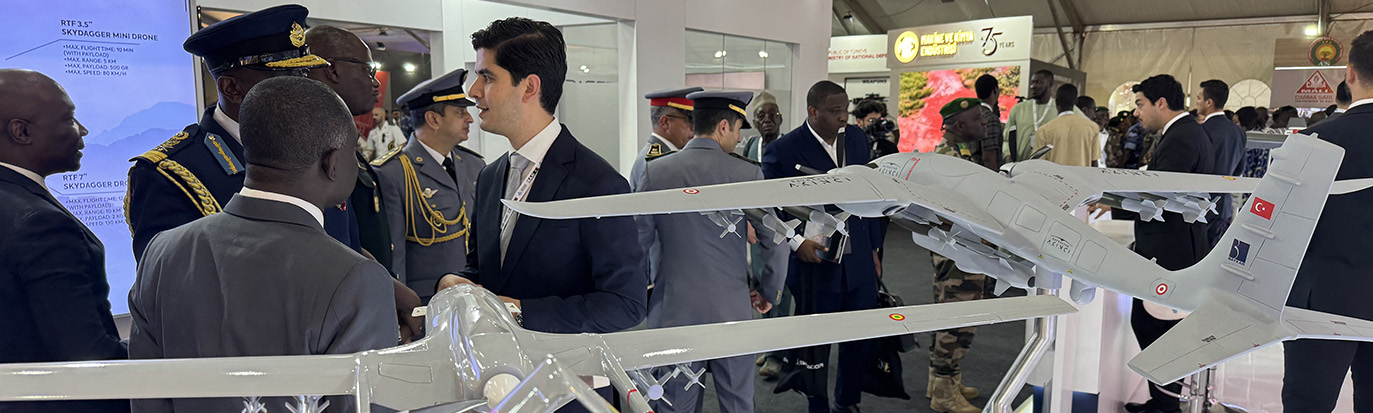
Representatives from the business community and academia expect continued demand in wholesale and retail trade and food, while highlighting the strong ecosystem Türkiye has built-particularly in the defense industry. Energy and information technology (IT) are identified as high–value-added sectors with strong FDI potential. In this context, Türkiye is preparing new regulations aimed at meeting investor expectations, particularly regarding transparency in energy and regulatory clarity in IT.
US$ 8 BILLION INVESTMENT CAPITAL
Of the US$ 11.4bn that entered Türkiye in the first nine months of 2025, US$ 8bn consisted of investment capital. In addition, US$ 1.6 billion was generated through real estate sales to foreigners, while US$ 2.6bn came from debt instruments. Investment liquidations, however, led to a net decrease of US$ 856mn overall.
WHOLESALE AND RETAIL LEAD THE WAY
On a sectoral basis, wholesale and retail trade attracted the largest share of investments, accounting for 34% of total inflows. Accordingly, US$ 2.7bn of the US$ 8bn in investment capital during the first nine months of the year was directed to this sector.
Food, beverage and tobacco manufacturing, along with information and communication services, ranked second and third, each with a 15% share. According to data from the Presidency’s Investment & Finance Office, the share of manufacturing reached 30% of total FDI.
INVESTMENTS BY COUNTRY
By country of origin, the Netherlands ranked first in FDI inflows to Türkiye during the first nine months of 2025, accounting for 32% of total investments. Kazakhstan and Luxembourg followed with 14% each. Germany accounted for 7%, while the United States contributed 6%. These were followed by the United Arab Emirates, Switzerland, the United Kingdom, France, and Spain.
TWO-THIRDS OF THE INVESTMENTS FROM THE EU
While 58% of FDI inflows to Türkiye between 2003 and 2024 originated from EU member states, this share increased to 64% in 2025. According to the UNCTAD Global Investment Trends Monitor, global FDI declined by 3% in the first half of 2025, whereas inflows to Türkiye rose by 29%. During the same period, FDI fell by 7% in developed economies and by 25% across Europe, while Türkiye demonstrated strong performance.
SECTORAL SELECTIVITY
FDI inflows in the first nine months of 2025 indicate stronger momentum compared to previous years. Prof. Dr. Ali Hepşen, faculty member at Istanbul University’s Faculty of Business Administration, stated that despite ongoing uncertainties, investor appetite for Türkiye has not disappeared; rather, sectoral selectivity has increased.
Commenting on expectations for 2026, Hepşen said: “If current conditions continue in 2026, Türkiye could attract FDI in the range of US$ 12–15bn, provided macroeconomic stability is maintained and no unexpected developments occur in the investment environment. If global liquidity conditions remain supportive and are combined with financial stability and predictability, inflows could exceed US$15bn. Conversely, adverse conditions could limit inflows to US$ 10-12bn. A reasonable expectation for 2026 is therefore around US$13bn, reflecting cautious optimism.”
ATTRACTIVE DOMESTIC DEMAND AND DISTRIBUTION CHANNELS
Prof. Dr. Hepşen emphasized that foreign investors continue to view wholesale–retail trade and food manufacturing as low-risk entry points due to strong domestic demand, diversified distribution channels, and broad market access. He added that consumer spending patterns, demographic dynamics, and the export-oriented nature of processed food are likely to keep these sectors attractive.
Hepşen continued: “Investor selectivity has become much more pronounced. Information and Communication Technologies (ICT), renewable energy, advanced manufacturing technologies, defense, healthcare, and medical technologies are increasingly on investors’ radar. Türkiye’s young talent pool and digitalization momentum make ICT particularly appealing. In manufacturing, Türkiye is shifting away from assembly-line production toward facilities capable of managing regional supply chains and competing globally. Foreign investors will be far more selective going forward.”
AIMING TO ATTRACT HIGH-QUALITY INVESTMENTS
These projections align with Türkiye’s objective of attracting ‘qualified FDI.’ Türkiye’s FDI Strategy (2024–2028) serves as a roadmap to attract high-quality investments needed to achieve long-term economic development goals, at a time when the global economic landscape is being reshaped amid increasing uncertainty.
The strategy, developed by the Presidency’s Investment & Finance Office, defines qualified FDI as environmentally friendly, knowledge-intensive investments that support global supply chains, create high-quality employment, generate value-added services, strengthen financial depth, and contribute to regional development.
Annual inflows above US$15 billion
Ahmet Burak Dağlıoğlu, President of the Presidency’s Investment & Finance Office, said, “The 45.5% increase recorded in the first nine months of 2025 and the annualized inflows remaining above US$ 15bn clearly demonstrate investors’ confidence in the Turkish economy.” Dağlıoğlu added that technology and supply chain investments have gained prominence, adding that President Recep Tayyip Erdoğan’s engagements in New York and the Investment Advisory Council Meeting held in October underscore Türkiye’s continued dialogue with international investors.
Foundation of the investment laid in critical sectors
Prof. Dr. Ali Hepşen emphasized that Türkiye can build a strong investment narrative in energy, defense, and information technologies, provided that the necessary groundwork is established:
Transparency in energy: Clear licensing procedures, grid connection rules, pricing mechanisms, and visibility of long-term contracts. When energy transition policies are reinforced and financial risk-sharing mechanisms are introduced, FDI momentum will accelerate.
Large-scale defence production ecosystem: Foreign capital typically enters through joint production and export-oriented models. Streamlined approval processes, supply chain clustering, and access to global markets will be decisive.
Key regulations in information technologies: Predictability in data security, artificial intelligence, cloud services, intellectual property rights, and R&D incentives can position Türkiye as a regional technology hub. The most critical factor is the availability of exit opportunities. As startup acquisitions, IPOs, and the venture capital ecosystem expand, foreign technology investment interest will rise accordingly.