
Potential New Steps in Cooperation Targeting the Top Five in Rare Earth Elements
Following the second largest rare earth element resort’s discovery in Eskişehir, Türkiye has emerged as a strategic partner for the West in the search for alternatives to China. The country aims to play a game-changing role in the global supply chain and become one of the world’s top five producers.
REGARDED as the “new oil” of the green transformation and high technology, rare earth elements (REEs) have created an entirely new arena of geopolitical competition within the global supply chain. With the discovery of a major reserve in Beylikova, Eskişehir, Türkiye has effectively declared, “I am in the game.”
As Western countries intensify their efforts to find alternatives to China’s overwhelming dominance, Türkiye’s steps in this field present a historic opportunity in terms of energy independence, profitable cooperation, and enhanced economic competitiveness.
CHINA’S DOMINANCE CREATES A GLOBAL RISK
Rare earth elements are indispensable raw materials for hundreds of critical technologies, ranging from smartphones and electric vehicles to wind turbines and defense systems. China alone controls more than 70 percent of global REE production and over 90 percent of global refining capacity.
According to experts, this dominance provides Beijing with significant strategic leverage while posing serious supply-security risks for other countries. Past export restrictions that brought technology production to a halt have clearly demonstrated this vulnerability. In response, Western countries-particularly the United States and the European Union-have intensified efforts to diversify their supply chains. The discovery of new mining sites, investment in recycling technologies, and the establishment of strategic partnerships with countries other than China form the backbone of these efforts.
TÜRKİYE’S ‘BEYLİKOVA’ MOVE
In the midst of this global search, the 694-million-ton reserve discovered in Beylikova, Eskişehir, has the potential to redraw the rules of the game. Recognized as the world’s second-largest REE reserve after China, the site has instantly elevated Türkiye to a prominent position in the global REE league.
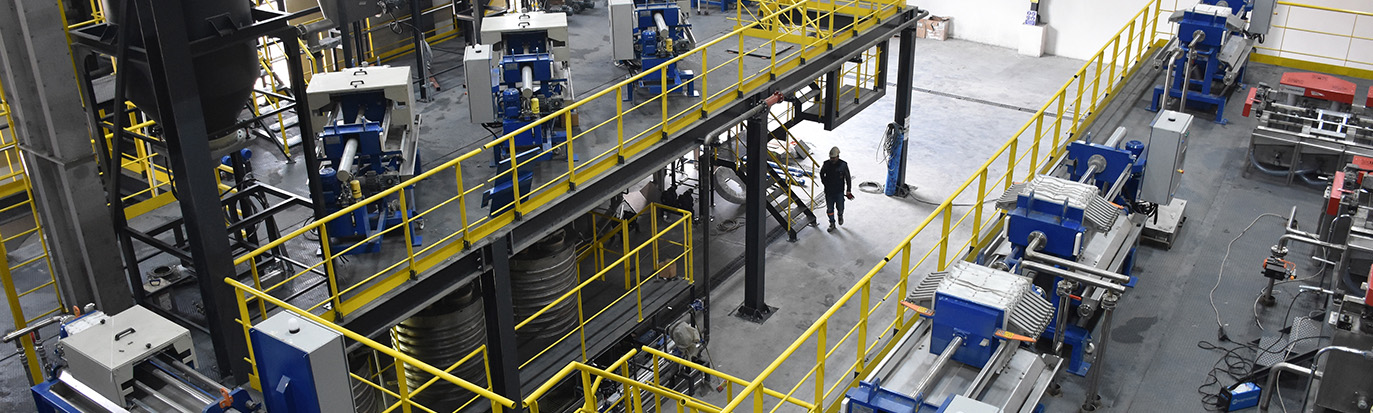
In line with this vision, projects led by the Ministry of Energy and Natural Resources are progressing rapidly. A pilot facility established in 2023 has reached an annual production capacity of 1,200 tonnes. However, the ultimate goal is the construction of a large-scale industrial facility with an annual capacity of 570,000 tonnes. The foundation of this facility is expected to be laid this year, and experts suggest that once it becomes fully operational, Türkiye could rank among the world’s top five REE producers.
INTERNATIONAL COMPETITION PLAYS A KEY ROLE
Experts agree, however, that the sheer size of the reserve is not sufficient on its own. The true added value and strategic power in rare earth elements lie in the highly complex refining stage, where mined ore is processed into 99.9 percent pure magnetic end products
In this field, China holds a near-monopoly thanks to its advanced technology and accumulated know-how. Analysts emphasize that international cooperation and technology transfer are essential for Türkiye to overcome this critical threshold and avoid remaining merely a supplier of raw materials.
In this context, strategic cooperation talks with countries that possess refining technologies and with leading global companies constitute one of the most vital pillars of the project. Such cooperation would encompass not only technology transfer but also joint production, R&D activities, and access to global markets.
As a result of these forward-looking steps, Türkiye’s initiative would go beyond mining, supporting its vision of becoming a technology hub that produces and exports high value-added products. Experts estimate that once this potential is fully realized, Türkiye could generate export revenues exceeding several billion US dollars annually.